Exploring the world of Passive Income with REITs: A Beginner’s Ultimate Guide to US Commercial Trusts opens up a realm of possibilities for those seeking to delve into the realm of real estate investment. This guide promises to unravel the complexities and intricacies of US Commercial Trusts, offering a comprehensive roadmap to generating passive income through REITs.
Introduction to REITs
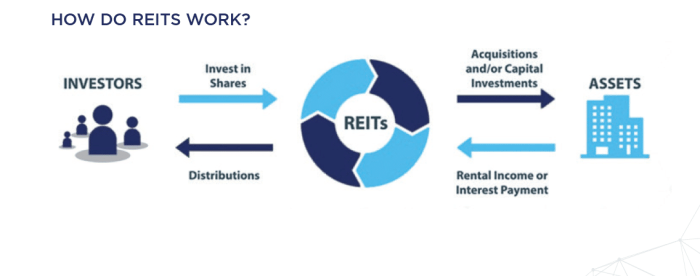
REITs, or Real Estate Investment Trusts, are companies that own, operate, or finance income-producing real estate across a range of property sectors. Their main purpose in the real estate market is to provide investors with an opportunity to invest in real estate without having to buy, manage, or finance any properties themselves.
How REITs Work as an Investment Vehicle
REITs work by pooling funds from numerous investors to purchase a portfolio of properties. These properties generate rental income, which is then distributed back to the investors in the form of dividends. Investors can buy shares of publicly traded REITs on major stock exchanges, making it a liquid and easily accessible investment option.
Benefits of Investing in REITs for Passive Income
- Steady Income: REITs typically pay out a high percentage of their earnings as dividends, providing investors with a consistent income stream.
- Diversification: Investing in REITs allows investors to diversify their portfolio with exposure to different types of real estate assets.
- Liquidity: Unlike owning physical properties, investing in REITs offers liquidity as shares can be bought and sold easily on the stock market.
- Tax Advantages: REITs are required to distribute at least 90% of their taxable income to shareholders, making them potentially tax-efficient investments.
Types of US Commercial REITs
Commercial Real Estate Investment Trusts (REITs) in the US market come in various types, each with its own unique characteristics and investment opportunities. The main types of US commercial REITs include Equity REITs, Mortgage REITs, and Hybrid REITs.
Equity REITs
Equity REITs are the most common type of REITs and invest in and own income-producing real estate. They generate revenue mainly through renting, leasing, and selling properties. Equity REITs typically focus on specific property types such as office buildings, shopping centers, apartments, or industrial facilities.
Examples of well-known US commercial Equity REITs include:
- Simon Property Group (SPG) – a major player in the retail real estate sector.
- Prologis (PLD) – specializing in industrial properties and logistics centers.
Mortgage REITs
Mortgage REITs, also known as mREITs, do not own properties but instead invest in real estate mortgages or mortgage-backed securities. They earn income through interest on loans extended to real estate owners or by purchasing mortgage-backed securities. Well-known US commercial Mortgage REITs include:
- Annaly Capital Management (NLY) – a prominent player in the mortgage financing sector.
- AGNC Investment Corp. (AGNC) – focusing on residential mortgage-backed securities.
Hybrid REITs
Hybrid REITs combine elements of both Equity and Mortgage REITs, diversifying their investments across both real estate properties and mortgages. This type of REIT offers a balanced approach to real estate investment. Examples of well-known US commercial Hybrid REITs include:
- Realty Income Corporation (O) – known for its diversified portfolio of retail and commercial properties.
- Starwood Property Trust (STWD) – a leading hybrid REIT with investments in both real estate properties and mortgages.
How to Invest in US Commercial REITs
Investing in US Commercial REITs can be a great way to generate passive income and diversify your investment portfolio. Here are the steps involved in investing in US commercial REITs:
Factors to Consider Before Investing in REITs
- Understand the different types of US commercial REITs available in the market, such as equity REITs, mortgage REITs, and hybrid REITs.
- Evaluate the performance and track record of the REITs you are interested in, including their dividend yield, occupancy rates, and property locations.
- Consider the economic factors that can impact the real estate market, such as interest rates, supply and demand dynamics, and market trends.
- Assess your risk tolerance and investment goals to determine if investing in US commercial REITs aligns with your financial objectives.
Tips for Beginners Looking to Start Investing in US Commercial REITs
- Start by doing thorough research on different US commercial REITs to understand their business models and investment strategies.
- Diversify your REIT investments across various sectors, such as retail, office, industrial, and residential properties, to reduce risk exposure.
- Consider investing in REITs through a low-cost index fund or exchange-traded fund (ETF) to gain exposure to a diversified portfolio of US commercial real estate assets.
- Monitor the performance of your REIT investments regularly and stay informed about market developments that can impact the real estate sector.
Generating Passive Income with US Commercial REITs
Investors can earn passive income through US commercial REITs by investing in real estate properties without the need to directly manage them. This type of investment allows individuals to benefit from rental income and property appreciation without the hassle of property management.
Distribution of Dividends in US Commercial REITs
US commercial REITs distribute a significant portion of their income to shareholders in the form of dividends. This distribution is mandated by law, with REITs required to pay out at least 90% of their taxable income to investors. The steady flow of dividends from these investments contributes to the passive income earned by investors.
The distribution of dividends from US commercial REITs plays a crucial role in generating passive income for investors.
Strategies for Maximizing Passive Income with REIT Investments
- Reinvest Dividends: By reinvesting dividends back into the REIT, investors can benefit from compound growth and increase their passive income over time.
- Diversify Portfolio: Diversifying investments across different types of US commercial REITs can help mitigate risk and enhance overall passive income potential.
- Monitor Performance: Keeping track of the performance of the REITs in your portfolio and making informed decisions based on market trends can help maximize passive income generation.
- Consider DRIP Programs: Some US commercial REITs offer Dividend Reinvestment Plans (DRIPs), allowing investors to automatically reinvest dividends to acquire additional shares, ultimately increasing passive income.
- Long-Term Investment Approach: Adopting a long-term investment strategy with US commercial REITs can lead to stable and consistent passive income streams, especially through property appreciation and sustained dividend payments.
Risks and Considerations
Investing in US commercial REITs comes with its own set of risks and considerations that investors need to be aware of. Understanding these risks and how they can impact your investments is crucial for making informed decisions in the market.
Market Fluctuations Impact
Market fluctuations can have a significant impact on REIT investments. When the real estate market experiences downturns or volatility, the value of REIT shares can also be affected. This can result in lower dividends or potential losses for investors. It’s essential to consider the overall market conditions and economic factors that may influence the performance of US commercial REITs.
- Market Sentiment: Investor sentiment and market trends can greatly affect the price of REIT shares. Positive or negative outlooks on the real estate sector can lead to fluctuations in the market.
- Interest Rates: Changes in interest rates can impact the cost of borrowing for REITs, affecting their profitability and dividend payouts. Rising interest rates may lead to lower share prices for REITs.
- Economic Conditions: Economic downturns or recessions can reduce demand for commercial real estate, affecting the occupancy rates and rental income of REIT properties.
It’s important for investors to diversify their portfolio to mitigate the impact of market fluctuations on REIT investments.
Risk Mitigation Strategies
To mitigate risks associated with investing in US commercial REITs, investors can consider the following strategies:
- Research and Due Diligence: Conduct thorough research on the REIT, including its financial health, management team, and property portfolio. Understanding the company’s fundamentals can help in making informed investment decisions.
- Diversification: Diversifying your portfolio across different types of REITs and real estate sectors can help reduce risk exposure. This can include investing in office, retail, industrial, and residential REITs.
- Long-Term Perspective: Taking a long-term approach to investing in REITs can help mitigate the impact of short-term market fluctuations. Focus on the potential for steady income and capital appreciation over time.
Final Thoughts
In conclusion, Passive Income with REITs: A Beginner’s Ultimate Guide to US Commercial Trusts serves as a beacon of knowledge for novice investors looking to navigate the world of real estate investment. With a focus on generating passive income through REITs, this guide equips readers with the tools and insights needed to embark on a successful investment journey.
Q&A
What are the tax implications of investing in US commercial REITs?
Investing in US commercial REITs can have tax advantages, as they are required to distribute at least 90% of their taxable income to shareholders, which can lead to favorable tax treatment for investors. However, it’s essential to consult with a tax advisor for personalized advice.
Are US commercial REITs affected by interest rate changes?
Yes, US commercial REITs can be impacted by changes in interest rates, as they may affect borrowing costs and property valuations. Investors should be aware of this risk and consider it in their investment strategy.
Can I invest in US commercial REITs through a retirement account?
Yes, investors can invest in US commercial REITs through retirement accounts such as IRAs or 401(k)s, providing a tax-advantaged way to generate passive income through real estate investment.