Exploring Contractor Savings: US State-by-State Workers’ Comp Premiums (Lowest to Highest), this introduction delves into a unique narrative that captivates readers right from the start.
The following paragraph provides detailed insights into the topic, setting the stage for an informative discussion.
Contractor Savings: US State-by-State Workers’ Comp Premiums (Lowest to Highest)
Workers’ compensation premiums are essential for contractors as they provide financial protection in case an employee is injured or becomes ill while on the job. These premiums help cover medical expenses, lost wages, and other costs associated with work-related injuries or illnesses.
Top 5 States with the Lowest Workers’ Comp Premiums for Contractors
- North Dakota
- Indiana
- Arkansas
- Mississippi
- Texas
North Dakota, Indiana, Arkansas, Mississippi, and Texas are among the states with the lowest workers’ comp premiums for contractors, making them more attractive for businesses looking to save on insurance costs.
Factors Contributing to Lower Premiums in Certain States
- Low claim frequency and severity
- Effective safety programs and practices
- Competitive insurance markets
- State regulations promoting cost containment
States with lower workers’ comp premiums often have fewer workplace injuries, better safety measures in place, and regulations that help keep insurance costs down for contractors.
Impact of State Regulations on Workers’ Comp Premiums for Contractors
- Regulations mandating safety training and compliance
- Limits on benefits and durations of coverage
- Use of managed care networks for medical treatment
- Availability of alternative dispute resolution mechanisms
State regulations play a crucial role in shaping workers’ comp premiums for contractors by influencing costs, coverage, and overall insurance market dynamics.
Variability Across States
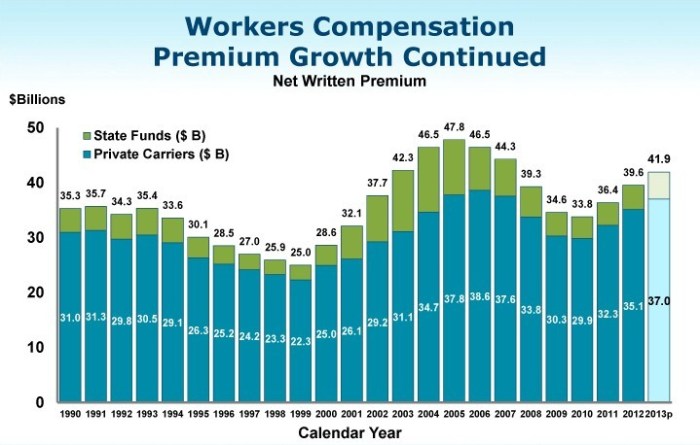
When it comes to workers’ comp premiums for contractors, the rates can vary significantly from state to state. Understanding the factors that influence these premiums is crucial for contractors to make informed decisions about their coverage.
State-by-State Premium Variations
- California: Known for having some of the highest workers’ comp premiums due to its large workforce and high cost of living.
- Texas: Often seen as having lower premiums compared to other states, attributed to its different regulatory environment.
- Florida: With its unique risks like hurricanes and high injury rates in certain industries, Florida tends to have moderate to high premiums.
Factors such as industry risk, workforce size, and state regulations play a significant role in determining workers’ comp premiums.
Regional Trends in Premium Rates
| State | Average Premiums | Key Factors |
|---|---|---|
| California | $X,XXX | Large workforce, high cost of living |
| Texas | $X,XX | Different regulatory environment |
| Florida | $X,XXX | Unique risks like hurricanes, high injury rates |
State-specific Regulations
State-specific regulations play a crucial role in determining workers’ comp premiums for contractors. These regulations vary across states and can significantly impact the cost of coverage for businesses.
Comparison of Regulations in States with Lowest and Highest Premiums
When comparing regulations in states with the lowest and highest workers’ comp premiums for contractors, several key differences stand out. States with lower premiums often have more lenient regulations, while states with higher premiums tend to have stricter requirements for coverage.
- In states with the lowest premiums, there may be fewer mandated coverage types, lower minimum benefit levels, and more flexibility for businesses to choose their insurance providers.
- On the other hand, states with the highest premiums typically have stringent safety regulations, higher benefit levels for injured workers, and mandatory coverage for a broader range of occupational risks.
Impact of Compliance on Premium Rates
Compliance with state-specific regulations can have a direct impact on premium rates for contractors. Failure to meet regulatory requirements can result in penalties, fines, or even higher insurance costs. On the other hand, businesses that adhere to safety standards and maintain a good track record of claims management may be eligible for discounts or lower rates from insurance providers.
Strategies for Cost Savings
To reduce workers’ comp premiums, contractors can implement various cost-saving strategies. Safety programs, risk management practices, and efficient claims management play crucial roles in lowering insurance costs. By prioritizing safety, managing risks effectively, and handling claims efficiently, contractors can significantly reduce their workers’ comp premiums.
Safety Programs
Safety programs are essential in preventing workplace accidents and injuries. By implementing comprehensive safety training, providing proper safety equipment, and promoting a culture of safety awareness among workers, contractors can reduce the frequency of workplace incidents. This, in turn, can lead to lower workers’ comp premiums due to fewer claims being filed.
Risk Management
Effective risk management involves identifying potential risks in the workplace and implementing measures to mitigate them. By conducting thorough risk assessments, implementing safety protocols, and regular inspections, contractors can minimize the likelihood of accidents occurring. This proactive approach not only improves worker safety but also helps in reducing insurance costs by demonstrating a commitment to risk prevention.
Claims Management
Efficient claims management is crucial in controlling workers’ comp costs. Contractors should have a streamlined process for reporting and handling claims promptly. By investigating claims thoroughly, working closely with insurance providers, and implementing return-to-work programs for injured employees, contractors can effectively manage claims costs and prevent unnecessary expenses.
Case Studies
One successful cost-saving initiative is a construction company that implemented a comprehensive safety program, including regular safety training sessions and safety equipment upgrades. As a result, the company saw a significant decrease in workplace accidents, leading to lower workers’ comp premiums over time.Another example is a roofing contractor that focused on risk management by investing in fall protection systems and conducting regular safety audits.
By proactively addressing potential risks, the contractor was able to reduce the number of accidents and subsequent insurance claims, resulting in cost savings on workers’ comp premiums.By adopting safety programs, implementing risk management strategies, and improving claims management practices, contractors can effectively reduce their workers’ comp premiums while prioritizing the safety and well-being of their employees.
Closing Summary

Concluding this discussion on Contractor Savings: US State-by-State Workers’ Comp Premiums (Lowest to Highest), we reflect on key points and leave readers with a lasting impression.
FAQ Compilation
What are workers’ compensation premiums?
Workers’ compensation premiums are insurance payments made by employers to provide benefits to employees who are injured or become ill due to work-related incidents.
How do state regulations impact workers’ comp premiums for contractors?
State regulations can influence premiums by setting guidelines for coverage, benefits, and other factors that determine the cost of insurance.
What are some cost-saving strategies for contractors to reduce workers’ comp premiums?
Contractors can implement safety programs, risk management practices, and efficient claims management to lower premiums.